
Course · All ages · beginner to advanced
Chinese Characters Fast-Track
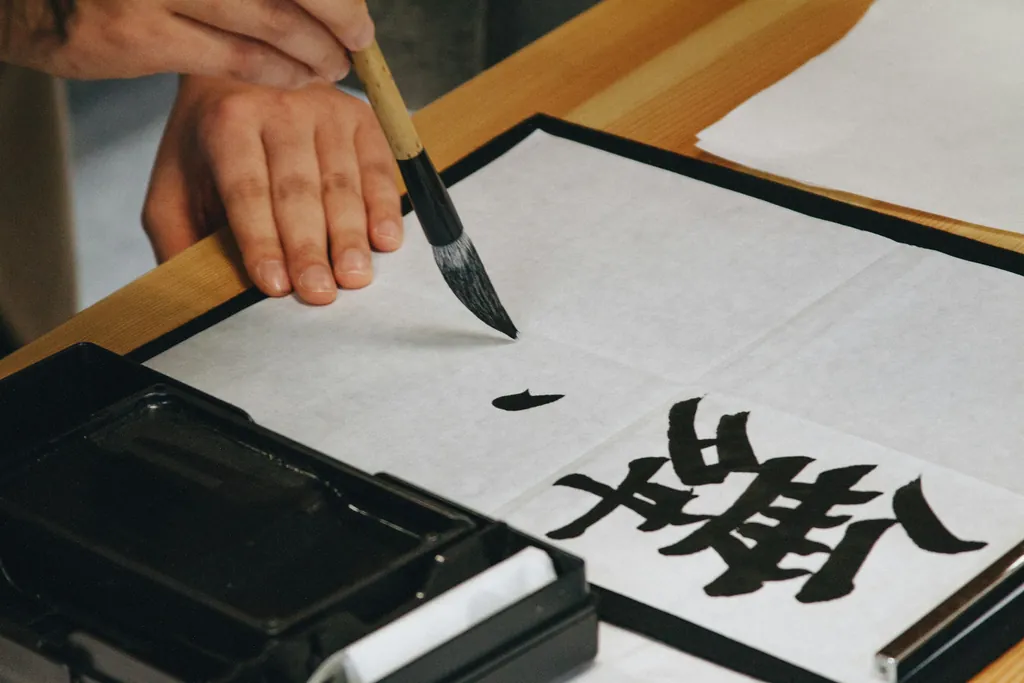
Characters look like ten thousand arbitrary pictures until someone shows you the system underneath. This course (汉字) teaches that system — the original images, the 32 strokes, the components that recombine — so you learn to read Chinese instead of memorizing it.
- When
- Year-round · start any week
- Where
- Gaobeidian campus, Beijing · online
- Class size
- 4–8 in group · one-to-one available
- Ages
- Kids, teens & adults · grouped by age
- Price
- Ask for a quote
Learn the system, not the list
Chinese characters were built in layers, and the course climbs them in order:
- Strokes — all characters reduce to 32 standard strokes; you learn to see and write them first.
- Pictographs — 200-plus characters that began as pictures (山 is a mountain; you’ll never unsee it).
- Associative compounds — around 700 characters built by combining meanings, learned through the logic that built them.
- Pictophonetic characters — 718 characters where one part carries the meaning and one the sound. This family covers roughly 80% of all Chinese characters — crack it, and new characters start decoding themselves.
Taught this way, students recognize their first 100 characters within a week — without flashcard grinding, because the images do the remembering.
Reading Beijing
Homework here has a special property: it’s written on every wall outside the classroom. Street signs, menus, metro maps, and shop fronts become reading practice, and lessons use them deliberately. Characters learned in the morning get spotted, photographed, and read by evening.
Who it’s for
- Kids & teens — character study through pictures and stories comes naturally to young learners; the kids’ track pairs with YCT preparation, where reading is half the test.
- Adults — from absolute beginners to speakers who can talk but not read; the adult track moves briskly toward practical literacy and feeds directly into HSK preparation.
Groups run four to eight, by age and level; one-to-one is available on campus or online.
Materials we wrote ourselves
Our teachers developed the school’s own character-practice workbooks for HSK levels 1–3 and a writing textbook for HSK 4 — the same materials this course uses. Between lessons, the Hantube app keeps review short, daily, and on your phone.
Good to know
Your questions, answered
How many characters do I need — and how long will it take?
Useful milestones: 300 characters reads HSK 1 material, 900 unlocks HSK 3, and around 1,200–1,500 makes menus, signs, and simple articles readable. Taught through the character system rather than flashcards, students recognize their first 100 within a week — the later hundreds come faster, not slower, as components repeat.
Is it really possible to learn characters without rote memorization?
Yes, because most characters aren't arbitrary. Over 200 began as pictures, about 700 combine meanings, and 718 pictophonetic characters — roughly 80% of all of them — split into a meaning part and a sound part. Learn the system and new characters start decoding themselves; review keeps them, but images do the heavy lifting.
Do I learn to handwrite, or just to read and type?
Both, in honest proportion. You'll learn the 32 standard strokes and write characters by hand early — the hand teaches the eye — while typing (pinyin in, characters out) covers the volume. How far you take calligraphic handwriting is up to you; Gaobeidian is full of calligraphers if it becomes a love.
My child can speak some Chinese but can't read — is this the right course?
A very common and happy case: every character learned snaps onto a word the child already owns. The kids' track teaches through pictures and stories, pairs naturally with YCT preparation, and runs as its own age-banded group.
Student voices
From someone who did it
Teacher Xin is good and demanding — and somehow patient at the same time. Exactly the combination I needed.
Get in touch
Tell us who's learning
Ready when you are
One conversation is enough to check dates, fit, and the right level.