
Our story
All under heaven, friends get together
Capital Mandarin School has been teaching Chinese from Beijing since 2006 — long enough to have a story worth telling, and a name worth explaining.
The name
天下汇友 — what our Chinese name means
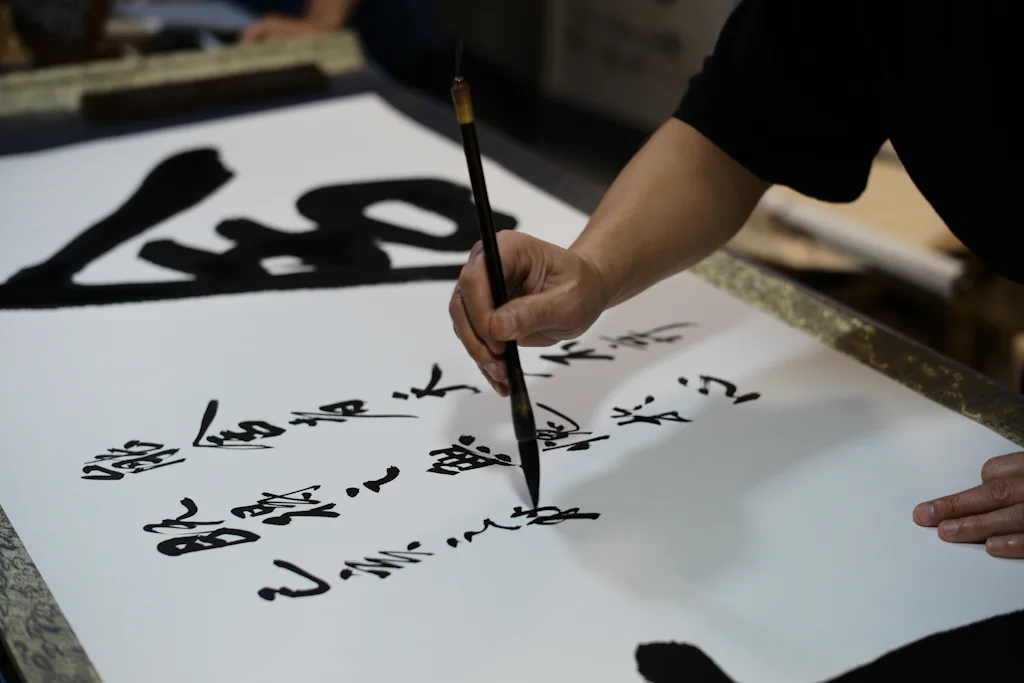
Our Chinese name, 天下汇友, means "all under heaven, friends get together." In imperial China, "all under heaven" (天下) was the word for the world itself — and the interesting thing about the idea, as our founder points out, is that it draws no absolute line between the centre and the periphery. Everyone is under the same heaven.
That is the school in four characters. We wanted a place built on the most integrative idea in Chinese philosophy and the most modern one in international life: a school where exchange happens, friendships form, and cultures get understood — because we, the people of the world, are all under heaven.
The founder
Ma Laoshi, who never stopped being a student
Sandy Ma — Ma Laoshi to her students — graduated from Beijing Normal University in Chinese literature and culture in 1995, taught in a Beijing primary school, then spent two years in Singapore teaching Chinese to locals and expats. There she noticed the two walls between cultures: what the media leaves out, and the language itself. She has spent her career taking both walls down. In 2006 she founded her own school, so that her foreign friends could finally learn Chinese the way she knew it could be taught.
Her favourite saying is 读万卷书行万里路 — "read ten thousand books, travel ten thousand miles." Reading deepens your knowledge; travelling widens your horizon. She'll tell you her work is really her hobby: running the school lets her "read" by listening to students' stories, and travel through the places they tell her about.
When she started the school, her husband — a Pu'er tea devotee — offered his favourite saying instead: "Pu'er tea, when you drink it, is a little bitter at first; later you feel the sweetness, and its taste gets stronger and stronger. This is life!" He meant that the school would be hard at the beginning and sweeter every year. Two decades on, students from five to seventy-seven years old have proven him right.
Ask her what she likes best about running a school and the answer isn't the campus or the curriculum — it's teaching the teachers: the moment a teacher discovers what they can do with the right support, and their students discover how fast Chinese can actually be learned.
The timeline
From one office in Guomao to a village campus
2006
Founded on 8 May — Ma Laoshi's own birthday — in a Guomao office, teaching Beijing's expat professionals.
2007
A second classroom opens in Guangming, teaching mostly Japanese students.
2008
Olympic-year visa delays empty the classrooms — so the school invents its Chinese Summer Camp. Eight campers attend.
2009
Thirty campers. The camp splits into age groups and gets its own schedule — the format still used today.
2010
A third branch opens in Xiangjiang Garden; over 150 campers; the first sister school signs on, in Germany.
2011
Over 200 campers; intensive weekday courses become the norm; part-time teachers go full-time.
2012
Construction begins on the Gaobeidian campus; a Geneva school joins the sister-school network; the in-house HSK 1–3 writing workbooks are finished.
2013
A partnership in Spain makes the school its only Chinese-language school partner there; HSK character workbooks and the HSK 4 writing textbook are completed.
2014
The Gaobeidian campus is completed, the Study Tour program launches, and the school applies to become an HSK internet-based test centre.
2015
The school moves into the finished Gaobeidian campus — classrooms and accommodation under one roof.
2016
Residential Full Camp accommodation opens on campus.
2020
Covid restrictions close the classrooms; teaching moves online.
2021
Development begins on Hantube, the school's own Chinese-learning app.
2025
The Chinese Summer Camp returns to Gaobeidian.
The next chapter usually starts with a hello
Meet the school Ma Laoshi built — tell us who's learning and we'll take it from there.